Brooklyncrown
An artist-led label turned into a brand you can wear — part gallery, part streetwear, all attitude.
This is a live, ongoing build. The real strategy is world-building — slowly growing the brand’s DNA into something that feels fun and immersive. What you see here is only a peek into what we’re making.
Brand & Art Direction
Web Design
Content & Social
Artist-led label
Visual identity
Website (gallery)
Product imagery
Motion & social
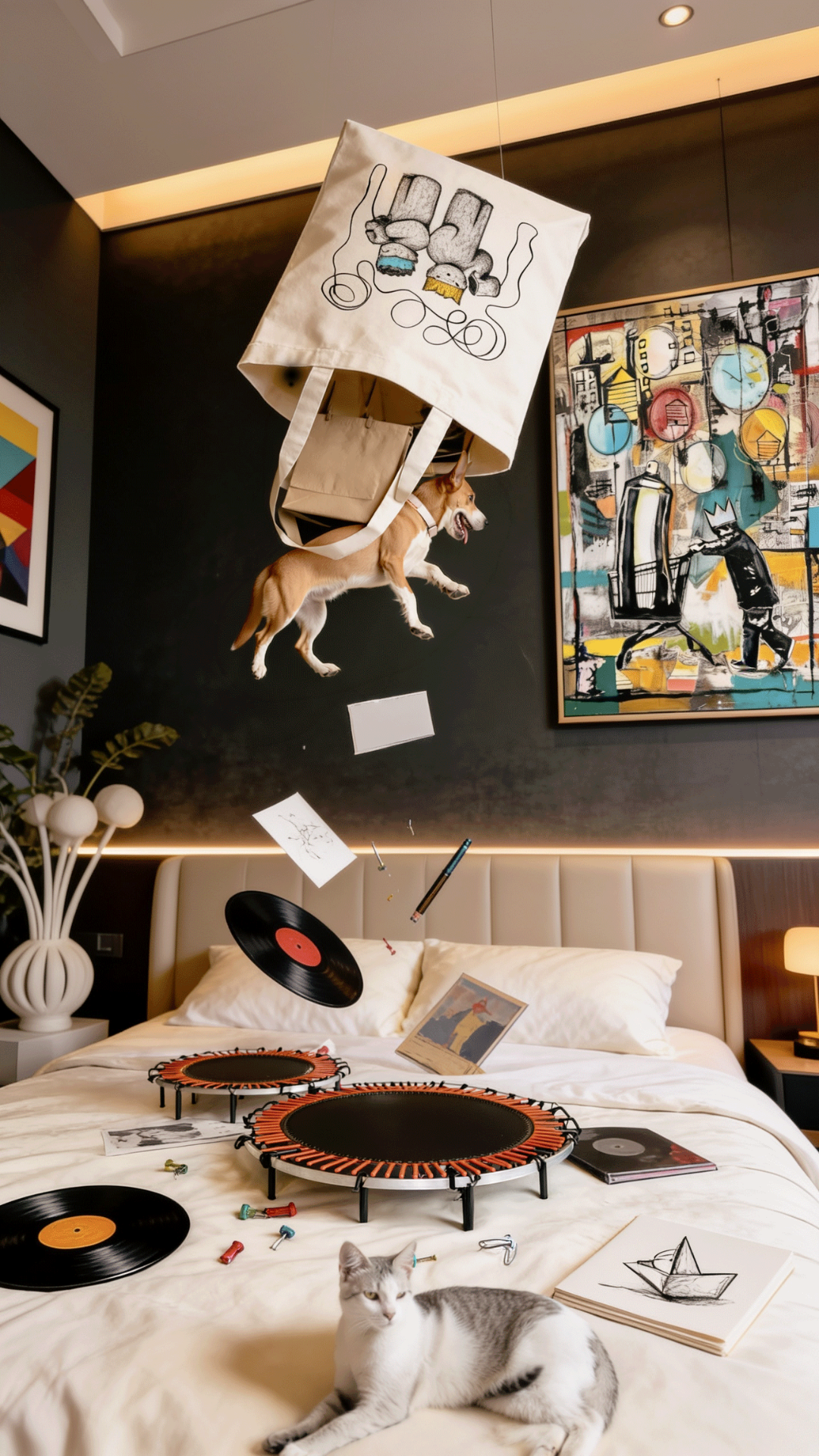
The signature surreal product imagery — a canvas tote staged as a scene, not a flat-lay.
A bold artist, ready to build a brand.
Brooklyncrown began as Chris Georgalas — a mixed-media artist whose work is nostalgic, referential and reassembled, with a real body of work behind him and momentum building. He was ready for the next step: ready to build a brand.
The art is strong and the recognition is landing — what came next was translating that into a brand: an identity that feels like a gallery and a label at once, a place to sell, and a content engine that keeps the feed as arresting as the work itself.
Sell the point of view — not the merch.
“Collectible art that brings a little whimsy into everyday life.”
Everything flowed from one line: this is collectible art made to spread a little whimsy — not printed product. That pointed away from the ordinary and toward a stark, gallery-grade identity where the art always leads and delight is the point.
Put the product inside a dream.
Here’s the call that was mine to make. Chris’s art could have gone the obvious route — print it on a shirt, shoot it on a white background, sell it as merch. I argued the opposite: don’t sell the product, sell the world it lives in. Every piece gets staged inside a surreal scene — a tote floating over a bed, a dog mid-leap, records suspended in air.
That’s the collaboration in one line: Chris’s artwork is the anchor; the surreal world around it is my direction. His originals give it soul; my staging turns them into a brand people can step into and own.
The scenes are built with AI as a creative partner for motion — but every one starts from a real reference point I shot or a partner captured. The surrealism is directed, not generated from nothing.
Motion-led content and surreal product scenes — the same directed dream language across video and still.
Meet the artist first.
thebrooklyncrown.com isn’t a shop — it’s the introduction to Chris. Its whole purpose is to bring people into his world: who he is, how he sees, and the nostalgic, reassembled body of work he’s making. It’s the gallery and the front door, not a checkout.
Benson lives here because Benson is Chris’s artwork — a character born inside his universe. The site shows where Benson comes from; the character then earns his own standalone site and storefront at bensonthebear.com. Three moves set that foundation.
An artist introduction
The site’s job is to introduce Chris and his world — his story and his original body of work — framed like an exhibition, so visitors meet the maker before any product.
Collectible art, in limited drops
Totes, Benson pins, world-building sticker packets, limited-run plushies, and original Benson prints — every release is a limited drop. It’s about collecting art pieces from Benson’s world, priced to stay accessible to everyone.
Two brands, one root
Chris’s fine art and Benson are different things, so each gets its own standalone site — two focused brands from one root, not one crowded shop.
Not a mockup — a brand in the world.
The gallery site is live, the catalogue is real, and Benson is already out in the world — on billboards across Charlotte, NC, in Times Square and other parts of NYC, and in a limited run in Italy. This is the shipped foundation the vision builds on.
Early signal: even on limited data, the first posts pairing Benson with “real world” content overperformed — but more than that, were genuinely well received.


Real work from the live catalogue — original mixed-media pieces and a finished commission, all shipped and shown at thebrooklyncrown.com.
To be clear on credit: the billboards and ArtPop recognition are Chris’s as an artist — earned before me. My job is what happens next: turning that raw talent and momentum into a brand — a positioning, a website, a product line and a content engine that let the work be discovered, bought and collected instead of just admired.
What we’re building toward.
This is an ongoing build, so these aren’t finished numbers — they’re the north star every decision is measured against.
“The job wasn’t to sell a tote. It was to build a world surreal enough that owning a piece of it felt like owning the art.”
Building a brand around the art.
Chris makes the art. I support and built with him: the positioning, the visual identity, the website and storefront, the product line, and the surreal content system — directing AI from real reference points, never generated from nothing. His work already sells; my job is to expand its reach — turning a following into a brand people everywhere can find, buy and collect. And Benson isn’t work-for-hire — Chris and I are brand partners, co-branding Benson and building the character’s world together.
From label to living universe.
The endgame isn’t a bigger merch catalog — it’s a world that branches into separate, focused brands. His fine art and Benson are two different things, so each gets its own standalone build-out. The landing page mixes everything for now; next, Brooklyncrown gets a dedicated museum-style page beside his catalogue, and Benson gets his own home and storefront at bensonthebear.com — where he shows up in real, identifiable community spaces and turns the neighborhood into the stage.
That’s how the brand DNA compounds — fun, immersive, rooted in real places. But it depends on infrastructure most brands skip. Here’s what we’re building toward, and the honest constraint on each.
A character bible, not just clips
Benson only compounds if he looks and behaves identically every time. The asset we’re building is the model sheet, palette, proportions and voice — the system a thousand posts stay on-brand against.
Frame-to-frame drift is where pure AI is weakest. Benson gets rigged in Blender for consistency; directed-AI builds the surreal environments around him, not the character.
Local spaces, by partnership
Benson “visits” a recognizable local spot; the venue co-posts; a place-based limited drop ties to it. The neighborhood becomes marketing, a wholesale door, and a story all at once.
Depicting a real business without buy-in invites takedowns and burned relationships. Every space is a partner with a release — the permission is the collaboration.
“Benson does ___”
A repeatable, recognizable content format beats scattered posts — and it’s franchise-able. Prove it deep in one market, then replicate the template city by city as the world grows.
Local depth doesn’t auto-scale. The win is a portable format, not a national campaign — one strong market first, resisting the urge to spread thin.
An owned reference library
Every scene starts from a real photo we shot. That growing library of originals is the one thing no competitor can copy or prompt their way into — and it’s what keeps the AI work defensibly ours.
Place-based drops tie every piece of content directly to revenue, and fans start asking for Benson in their spot — the UGC loop that funds the next chapter.
A strategist’s note: the bet isn’t the animation — it’s the character system, the partnerships and the reference library underneath it. Build those and the world runs on its own.
This is a hypothesis, on the record.
The bet is that character-and-world storytelling — not product — is what builds a brand people collect. I’ll update this case study within a year with what actually happened, to prove or disprove it. Come back and hold me to it.